

As AfroTech marked its 10th anniversary in Houston, co-founder and CTO Akim Niyonzima and CMO Eno Oduok sat down with Trendy Africa Magazine to talk hybrid-electric jets, AI that speeds up certification paperwork, and why the boldest move a young engineer can make is simply to walk up and ask.
Akim Niyonzima’s career in aerospace began with a résumé he had to ask for back.
He was an aerospace engineering student at Wichita State University, in a city that has been building airplanes for about a century, walking a campus career fair with friends who were also international students. The word among them was discouraging. The major aircraft manufacturers did not hire international students, they said, so there was no point in applying. Niyonzima had brought ten résumés, and he handed most of them to automotive companies recruiting mechanical and electrical engineers. Then, with time left on the clock, he decided to have one more conversation, with Bombardier, for no better reason than that he admired what they built.
That conversation led him to a hiring manager. She liked what she heard, especially about the side projects he had been building on his own time, and she asked for his résumé. He had none left. So he walked back to one of the car companies, politely asked for his résumé back, and handed it to her. Two weeks later, he followed up. The follow-up became an internship, and the internship became a role as an avionics engineer at one of the most recognized business jet manufacturers in the world.

Co-Founder and CTO, Nimbus Aerospace
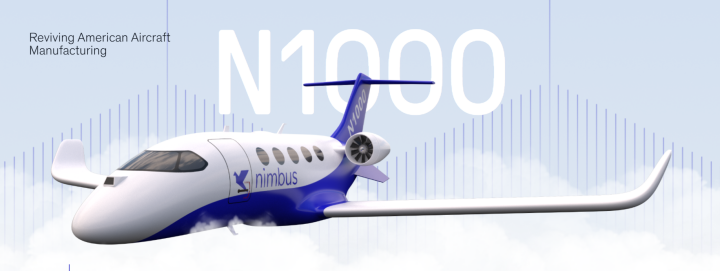
Today Niyonzima is co-founder and chief technology officer of Nimbus Aerospace, a Seattle-based startup developing the N1000, a hybrid-electric light business jet. He and Nimbus chief marketing officer Eno Oduok came to Houston for AfroTech’s 10th anniversary, and on the eve of their panel they sat down with Trendy Africa Magazine to talk about building hardware in a software world, using AI to break a certification bottleneck, and what the diaspora owes the generation coming up behind it.
Ten Years In, the Room Has Changed
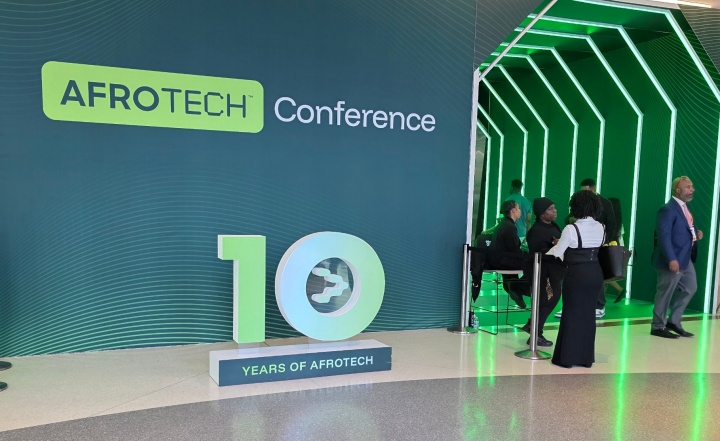
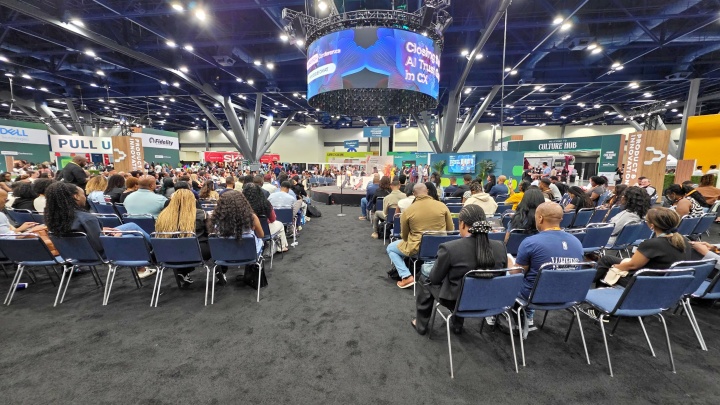
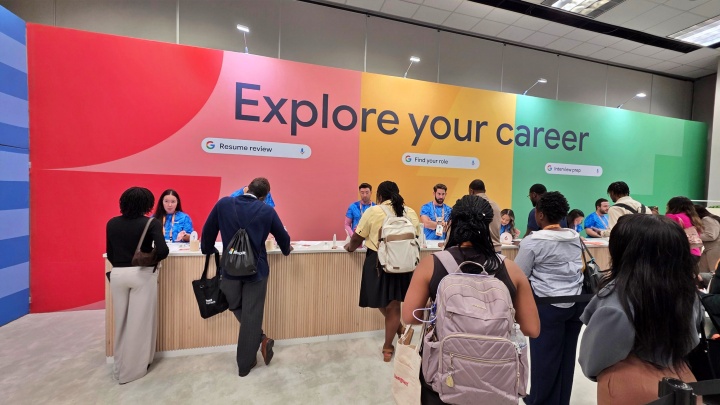
AfroTech began in the Bay Area a decade ago with roughly 650 attendees. Its 10th edition, held November 2 to 6 at Houston’s George R. Brown Convention Center, was built for more than 40,000 people across 11 stages, 15 programming tracks and over 300 speakers. The scale is the headline, but the more interesting shift is in who now fills the room. For years, the familiar picture of a Black tech founder was someone shipping an app. Nimbus complicates that picture in the best possible way. Its product has a wingspan.
Leaving the Safe Seat
At Bombardier, Niyonzima’s title was avionics engineer, but the work kept widening. He took on mechanical design, saw his electrical designs through to the technicians who installed them, supported the work on the aircraft itself, and collaborated with colleagues in Canada. He kept asking for more, and eventually he reached the natural ceiling of a legacy manufacturer.
“At an established manufacturer, there’s only so much more they can give you,” he says. He had started exploring the aerospace startup world when Adrian Groos reached out, and the timing was right. The two connected on LinkedIn and began working on a sustainable aircraft in 2023, with Groos as CEO and Niyonzima leading the technology. “That was my chance to go out there and try something new,” he says, “to learn more about the aviation industry and grow my network.” Oduok’s road was less direct and, in its own way, just as telling. A Houston native and first-generation Nigerian-American, she founded Naija Comm, a media platform and community for Nigerian creatives, in 2020. Her résumé also runs through Techstars, AMC Networks and Wieden+Kennedy. Aerospace was not on her map until her role at Techstars put her in the same office as Nimbus, one of its portfolio companies. She saw the team every day and talked with them about go-to-market strategy and the realities of the founder journey. What pulled her in was the mission, a company working on the future of mobility, and the people behind it. She notes that Nimbus counts itself among the few Black-owned aviation and aerospace companies in the world. For Oduok, bringing that story to AfroTech in Houston was a homecoming.
Hardware Is a Bigger Door, Not a Harder One
Many young diaspora engineers are steered toward software because it is faster and cheaper to start. Niyonzima does not argue with the logic. He reframes it. “Everything still needs software,” he says. “But any hardware you work on has multiple layers. It has the electrical, the mechanical, its own fundamental physics, and then the software on top.”
His point is that hardware does not replace a software foundation. It compounds it. An engineer who understands both the physical system and the code that runs it can walk through more doors than one who knows only half. His advice is practical: try it, and do not wait for a class to assign it. He was building drones and model planes before he knew aerospace would be his career, and at Wichita State he worked on at least five engineering projects, from aviation accident analysis to a CubeSat mission.
Marketing an Aircraft You Cannot Sell Yet
A jet that has not yet earned certification is a difficult product to market. Oduok’s answer is to treat the process as the story. “A lot of people think it’s solely about ideation,” she says. “For us, it’s about execution.”
That means documenting the real work as it happens, the good and the bad. Nimbus flew a one-tenth-scale demonstrator in December 2024, then flight-tested a much larger quarter-scale prototype, the NX1, in Oregon this year. Along the way, the team made the kind of call that only an honest record captures. After building and flying a distributed electric propulsion layout, the team concluded it would not be commercially viable at full scale and switched to tail-mounted ducted fans. It also moved from an all-electric design to a hybrid-electric one to save weight. Nimbus says the N1000 is designed to deliver jet performance with about 40 percent lower fuel consumption, and it plans to certify the aircraft under the FAA’s Part 23 rules. For Oduok, every milestone, partnership and pivot builds trust long before the first customer delivery.
AI That Drafts, Humans Who Decide
Nimbus has built its own AI tool to speed up certification, called the ACT (AI Certification Tool) platform, and Niyonzima is precise about what it does and does not do. The idea came from his years at Bombardier, where he worked on the certification side and saw how slow the process could be, even for something simple.
He describes the old rhythm. An engineer spends months drafting compliance matrices, certification plans, and flight and ground test documents. The drafts go to a senior engineer for review, which takes weeks, and come back with comments. Then the cycle repeats on the next project with nearly identical language. “I always asked myself, why can’t we automate this?” he says.
The ACT platform now produces those first drafts in a couple of hours instead of months, and it catches the small details that can sink a submission. In regulatory writing, he explains, the difference between “this part shall” and “this part will” is not cosmetic. A wrong word can send a document back through the whole review cycle, and it is an easy detail for a person to miss. What the AI does not touch is judgment. Testing, safety thresholds and final validation still sit with Nimbus engineers, designated engineering representatives and FAA officials. “It’s not like AI is the one certifying the aircraft,” Niyonzima says. “It’s a tool that works side by side with an engineer.”

Chief Marketing Officer, Nimbus Aerospace
Telling the Story Plainly
Oduok does not soften what it means to build in an industry where the team is often among the few, or the only, people in the room who look like them. “It’s a blessing to carry,” she says, “but it’s not an easy thing.”
Her approach to the brand is candor. Nimbus talks openly about what the industry has been like for its team, the resources that helped, and the pressures it has had to navigate. “It sounds cliché, but it’s being authentic,” she says. “You never know how your experience will impact someone else.”
The Case for Asking Out Loud
Asked what he would tell a young engineer in Kigali, Lagos or Houston who wants a career in aerospace, Niyonzima returns to the career fair. Online applications, he points out, usually stop with a recruiting team, and a stack of generic, AI-written submissions does nothing to show what makes a candidate different. Personal contact reaches the people who actually make the decision. “When I put myself out there, I got to meet the managers,” he says, “and they liked my story.”
He also names something many diaspora professionals will recognize, an upbringing that teaches you to keep your head down and let hard work speak for itself. “Sometimes you have to vocalize what you’re looking for,” he says. Show up at the conference. Tell people what interests you. Ask for the thing you want.
Funding Is a Marriage, Not a Headline
Oduok wants founders to read funding announcements with a sharper eye. Headlines about one founder raising a million and another raising ten can make capital look like a prize. She sees it differently. “This is not charity,” she says. “That investor is with you for the duration of your business, for better and for worse. It’s kind of like a marriage.”
Venture capital works for Nimbus, she says, but it is not the only path. Crowdfunding, angel investors, grants and government contracts each fit different companies, and the right choice depends on the business and on how much equity a founder is willing to give up. The misconception she wants to correct is that a big raise means a founder has made it. A big raise comes with expectations, legal obligations and a long-term partner.
Reinvesting With What You Have
For young diaspora professionals who want to invest back into Africa but are early in their careers, Oduok’s advice is to start with what you already hold. At Naija Comm, her team set aside a share of the profits from brand campaigns to fund scholarships and grants for African students. Not everyone has profits to share, she says, but almost everyone has something. A job lead, a resource or a warm introduction costs nothing and can change someone’s trajectory. Niyonzima adds that time counts too, whether it is spent mentoring or simply talking with young people about the path.
As for Nimbus, the team sees partnerships as its main bridge to the continent over the next five years. That could mean working with manufacturers in Africa, hiring African talent, and hosting events with African-owned companies. Niyonzima says maintenance, repair and overhaul providers in Morocco and Ethiopia have already reached out about working together, and he sees promising activity in South Africa. He is careful to call it early, but the direction is clear.
Start Where You Stand
Both leaders closed on the same idea from different angles. Oduok points out that Nimbus itself began with a LinkedIn connection between two people who decided to act on an idea. “You don’t have to have all the answers today,” she says. “Start with what you have and go from there.”
Niyonzima, a self-described engineer who would happily spend every day indoors building things, admits that showing up does not come naturally to him. He does it anyway. “You still have to talk to investors. You still have to go to conferences,” he says. “And when you go, you meet people who are willing to help in ways you didn’t even know you needed.”
A decade ago, AfroTech was a room of about 650 people. This year, it was built for more than 40,000, and among them were two builders working on an aircraft. The lesson Nimbus offers the next generation is not that the path is easy. It is that the first step is usually smaller than it looks: one more conversation, one follow-up email, one résumé asked back from one table and handed to another.

About Nimbus Aerospace
Founded in 2023 and based in Seattle, Nimbus Aerospace is developing the N1000, a hybrid-electric light business jet designed to make private aviation cleaner and more efficient. Learn more at nimbusaerospace.com.
By Jennifer Onwumere for Trendy Africa Magazine

Leave a Reply