Akinola Davies Jr. never knew his father. He passed away when he was very young, but the British-Nigerian director felt compelled to memorialize him in his latest offering “My Father’s Shadow.” A film inspired by this loss and the effect it had on him and his brother Wale, who wrote the script.
A personal epic set in Nigeria in the early 1990s, it centers on two brothers who spend a day in Lagos with their estranged and activist father, Folarin (Sopé Dìrísù) as the country goes through political turmoil and a brutal dictatorship.
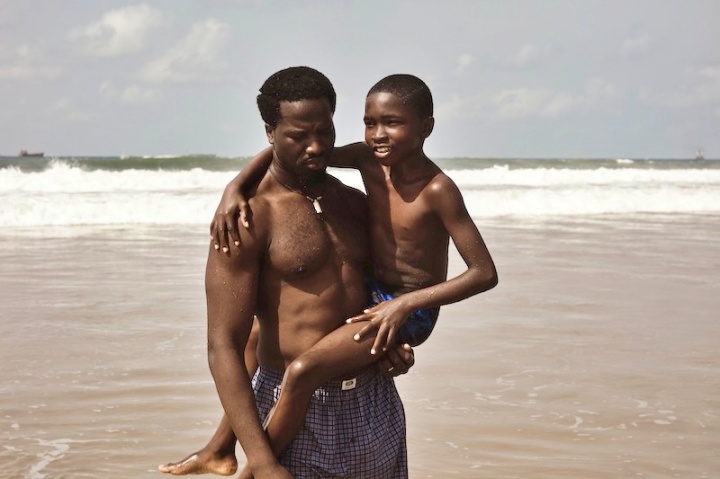
“We remember what it was like, the hopes and dreams of our mother being scuppered by this military dictatorship canceling the election. All of that was very real,” shares Davies Jr. “Although we didn’t know our father, a lot of projections and stories of who he really was are what we put into Folarin’s character. Stories we were told about him, his personality and his friendship groups. We had to project our younger selves into the story, but we gave it a bit of a creative license as we didn’t know him really well.”
The movie opens in 1993 with scenes that establish the brother’s everyday routine. Bonding and playing on red clay sand outside their rural home while awaiting their mother’s return from work. Their day is brightened by an opportunity to hang out with their estranged father, a factory worker who was often away from home for long periods of time. Over the course of the film, we follow the trio as Folarin attempts to collect several months of back pay from the factory, while hanging out with his sons at an amusement park and the local beach, all while the political unrest threatens their escapades.
With the film, we are drawn entirely into a world where we intimately witness an exchange between father and son, son to father, as they navigate their relationship through a physical and emotional journey. There are isolated instances of the father’s tenderness, when he shares his perceptions of life with his sons.
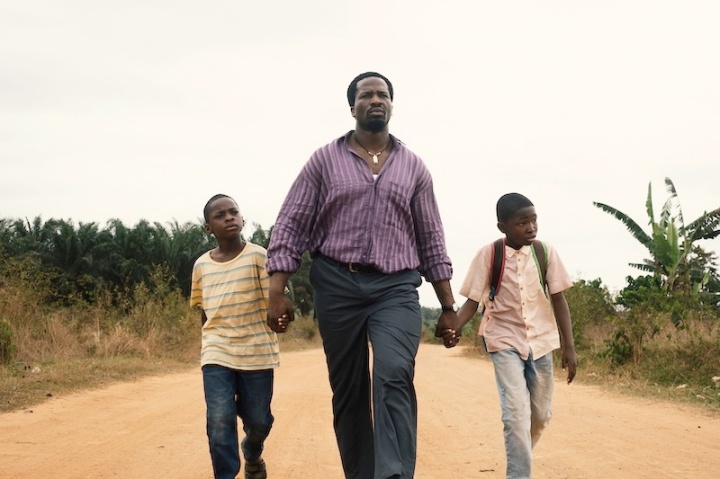
Davies has gone to extraordinary lengths to recreate the Lagos of the period. Everything – from the cars to the furniture to the clothes – feels just right and the film never falls prey to false sentimentality. The occasional harshness experienced with systemic challenges only adds to its resonance. The camera acts like a member of the family, moving in tandem with the characters, the film’s mood and rhythm in this tale about memory, grief and absence.
“My Father’s Shadow” isn’t riddled with melodrama or drowned in sentimentality. There is a gentle intensity in the scenes as it glides from the lush forestry of their rural home to the chaos of Lagos. With this film, Davies is drawing on what and where he knows.
“Shooting in Lagos is a logistical feat. I have to say,” he adds. “We set up a service company about 11 years ago there so that we could shoot in Lagos and work with the local community. We try not to lock people out of the process because in a city like Lagos you really need access to get an authentic story. We have been working in Lagos for a long period of time and have a lot of favor with a lot of communities in the city.”
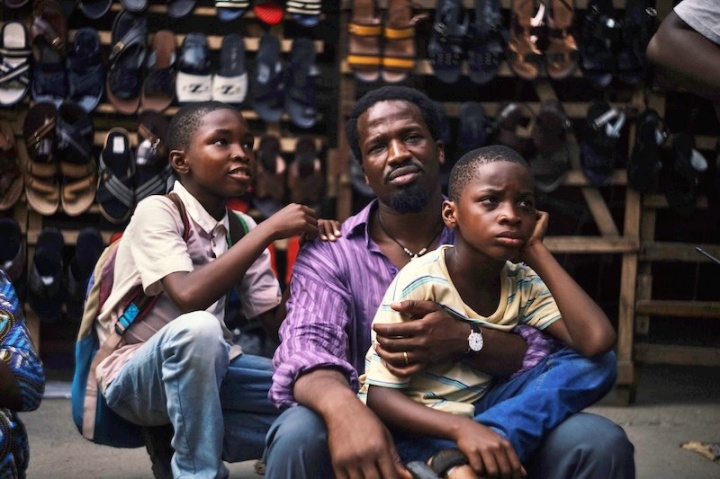
The film, which has been nominated for several accolades, recently earned him the Best Director award at the 28th British Independent Film Awards (BIFA).
For Davies, who is also known for his narrative short film “Lizard,” which premiered at the 2020 Sundance Film Festival, the world is his oyster for he has several more projects he hopes to develop in genres ranging from thrillers, westerns to even more familiar dramas.
“We have so many ideas,” he continues. “Before ‘My Father’s Shadow,’ we had 7 or 8 ideas. Being Nigerian and not having seen yourself reflected on screen for a long period of time, there is an urgency in the stories we want to tell. Whatever feels the most urgent is what we will lean towards.”
“My Father’s Shadow” is playing in theaters.
By Samantha Ofole-Prince