Concerning reported U.S. strikes on terrorists in Nigeria, Emmanuel Ogebe, international human rights lawyer, shares his views as a bilateral affairs and subject matter expert on why ‘bombs are blazing’ is not so-silent night. It is instructive that the first direct strikes by America are in Sokoto state – the very state where during the Trump first term, US special forces rescued American hostage Phil Walton killing six terrorists.
Sokoto is an unusual site for an initial attack because it is not the epicenter of global jihadi terrorism in the northeast where there was a deadly suicide bombing yesterday in Borno State. Nor is it the epicenter of regional jihadi terrorism in the north central where there was a Herdsmen militia attack in Benue state as well. Both attacks by two different Islamist groups killed Muslims and Christians respectively.
The northwest strike on a motley crew of wheeling dealing bandit kidnapper terrorists seems more a safe bet for the U.S. that had conducted a boots on ground operation there before. There was likely sufficient institutional memory to make for an easier update and relaunch.
Similarly, the rationale could be as simple as vendetta. Being the same place where an American was held hostage, it was deserving as the first place to take a blow torch to. This would be entirely consistent with the strikes in Syria just days before that were admittedly in retaliation for the deaths of U.S. troops.
Thirdly because of its proximity to the country of Niger where the U.S. until recently had two military bases, there was probably a greater deal of familiarity with this northernmost region than in central Nigeria where horrendous Christian slaughter is pervasive.
The fact that this wasn’t in Niger state where the last of 250 catholic schoolkids were just recovered after a monthlong abduction (thanks to a Swiss brokered ransom that reportedly included a prisoner swop with Ansaru terrorists) reenforces this. Niger state is in the north central and the St Mary’s mass abduction was the most heinous school atrocity since the infamous 2014 Chibok girls abduction of #BringBackOurGirls notoriety.
Even in the northwest, it was not Kebbi state home to a week-long abduction of 25 Muslim schoolgirls the month before. On the whole it seemed to be a very “safe bet” type of intervention. The Nigerian government has already claimed that this was a joint operation with US and other allies.
There are several reasons why this is very likely true.
The 2020 special rescue op was almost screwed up for lack of confirmed consent of the Nigerian government as a senate hearing heard this year. For the record, when Trump authorized U.S. special forces to rescue American citizen Phil Walton who was kidnapped in Niger and then spirited to Sokoto state, Nigeria, their aircraft was stopped mid air during the operation because Kash Patel (now FBI Director) had failed to obtain air space entry permit for them.
Per media reports, “ Patel has been criticized for his handling of a sensitive operation aimed at freeing American captives. Two weeks after the Yemen hostage deal, Patel found himself in the middle of another high-risk operation. Philip Walton was a 27-year-old American who had been seized by armed men at his farm in Niger, near the Nigerian border.
The kidnappers transported Walton to Nigeria and demanded a million dollars in ransom. There were also indications that the kidnappers were contemplating turning him over to a terrorist group operating in the region. Patel was accompanying President Trump on a visit to Fort Bragg, the military installation in North Carolina that is home to the U.S. Army Special Operations Command.
While they were there, Patel received intelligence that Walton would be held at an encampment for several hours, enough time to stage a daring Seal Team 6 raid to rescue the hostage. Mr. Trump signed off on the operation, which involved parachuting into Northern Nigeria and trekking for miles to the compound where Walton was being held.
Then-Defense Secretary Mark Esper had greenlit the plan, but there were still some final questions that needed to be answered before he could give the go order – primarily whether the Nigerian government had given the U.S. permission to use its air space. According to Esper’s memoir, Patel, who was the senior director for counterterrorism at the time, assured Defense Department officials that the State Department had received the necessary permission from the Nigerians.
But Patel’s information was incorrect: the Nigerians had not given their approval. By this time, Air Force planes carrying the Navy SEALs were in the air just a few miles from the Nigerian border. Esper wrote in his memoir, “A Sacred Oath,” he realized the government had to make an agonizing decision. He told the White House they could go forward with the operation and risk having their planes shot down — or abort the mission and miss a crucial opportunity to save Walton. But at the last minute, word came that the State Department had received clearance to use Nigerian airspace. The mission went forward, was executed flawlessly, and Walton was returned to safety.
But Esper and other officials were furious at the role Patel had played, believing he had inserted himself into the operation in violation of regular protocol, and then nearly botched it by transmitting false information. According to Esper’s account, Patel’s carelessness carried significant risk for the SEALs.
“I was concerned that being packed in an aircraft burning holes in the sky for an extra hour or so would wear on the special operators, that it might affect their readiness somehow,” he wrote in his memoir. Esper also wrote of the incident, “My team suspected Patel made the approval story up, but they didn’t have all the facts.”
Patel has denied Esper’s version of events. In his own book, “Government Gangsters,” Patel portrays Esper as a “deep-state” actor who “always seemed to be subverting the president’s agenda,” including by putting up obstacles to counterterrorism raids in Africa and the Middle East.” He argued that Mr. Trump had the ultimate authority to order the mission.”
From the foregoing you can imagine how a nation like America took permission from Nigeria before coming to rescue its own citizen would certainly coordinate with Nigeria while targeting her enemies.
A second reason would be the loss of US military bases in Niger following a pro-Russian military coup. This strategic continental land base was a key AFRICOM stronghold and staging area for Sahel region ops inclusive of Nigeria. An ex-Pentagon contact i asked about US limited operational capabilities given the loss of this critical foothold told me that the US had quickly mitigated that dislodgement.
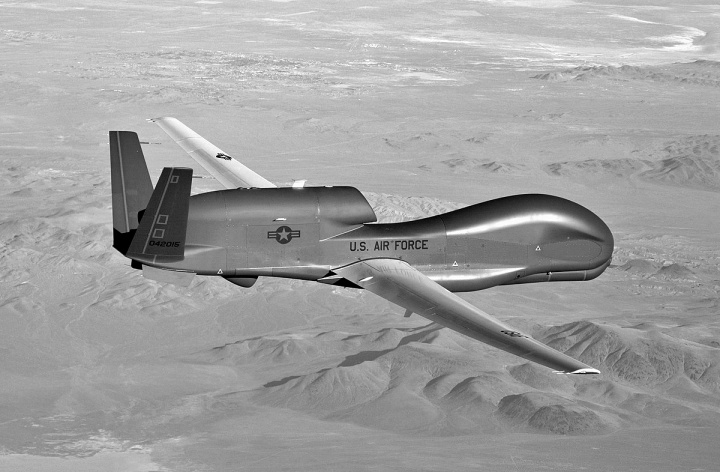
Reports of US aerial surveillance overflights days before the strikes in the region were a clear indication of just how this was possible. Again given America’s insistence on airspace permitting during the 2020 Walton rescue aforesaid, it would have coordinated this with the Nigerian especially after its own Air Force plane was detained in Burkina Faso for weeks for reported breach.
The real puzzle though is that unlike Trump’s claims, the terrorists in Sokoto are not killing both muslims and Christians but not on the scale of the massacres in the middle belt. For reference, the number of displaced Christians assessed by Rep Riley Moore’s Congressional Delegation to my home state of Benue is over 600,000 in just half of the state – which is equal to the number of muslims and Christians displaced in three northwestern states.
Therefore these strikes won’t significantly impact the terrorists responsible for the most Christian killings. If anything it might take out terrorists like the Al Qaeda-linked Lakurawa terrorists who were invited into the country by local Muslims as mercenary security forces to combat crime syndicates and then became an oppressive occupying non-state regime.
There is however another intriguing sub radar possibility – the curious case of Dan Rideout. The American missionary pilot was abducted in the country of Niger last month. Just like Walton, he grew up in the region and actually attended school in Nigeria with friends of mine.
Like Walton, there’s a fear that he could be trafficked and resold to Islamic State West Africa Province (ISWAP) or Boko Haram who have long hankered an American hostage or target. It is within the realm of possibility that this is the real strategic U.S. interest in the present strikes because there’s no compelling reason why Sokoto would be the first stop for guns ablazing. Ironically Muslims who’ve protested that there’s no Christian genocide because they’re being killed too will be the main beneficiaries of an attack on terrorists in Sokoto.
And the Christians who were asking me with bated breath in Nigeria last week while I visited when Trump is coming may have to wait a bit to feel the impact on their killers. While I was in Nigeria, terrorists proposed marriage to a Christian teen working on her farm. When she declined, they brutally amputated both her arms. She’s 14. In northwest Nigeria. Today, Christmas day, a priest has been shot. In southeast Nigeria. Christians will have to take a number.
Emmanuel Ogebe, Esq, is an award-winning international human rights lawyer based in Washington D. C. who has played a role shaping US Congressional and foreign policy on Nigeria. Mr. Ogebe has been a guest speaker at university campuses across the US and radio and TV programs around the world, including CNN, Fox, Al Jazeera, BBC, the Geneva Summit, United Nations, World Bank, the Canadian Parliament etc. His decades of advocacy led to the US designations of Boko Haram as a foreign terrorist organization (2013), Nigeria as a Country of Particular Concern (2020) and International Criminal Court Prosecutor’s determination of crimes against humanity in Nigeria (2020) to mention a few achievements. He was consulted by Presidents Clinton (2000) and Bush’s Administrations (2003) on their visits to Nigeria. He currently serves as Special Counsel for the “Justice for Jos” Project, advocating for and assisting survivors/victims of terror. Mr Ogebe is a recipient of several awards including President Obama (2009), the Darfur Women Action Group (2016), Diaspora groups in the US as well as US States and local authorities citations and recognitions in Florida, Arkansas and New Jersey amongst others. Emmanuel Ogebe this year received a Diaspora award from the Nigerian government as an outstanding citizen abroad for his humanitarian work and development of the law. The award was bestowed at Nigeria’s presidential villa where he was once a political prisoner of a military dictatorship on the 29th anniversary of his captivity. He came on exile to the U.S. a year after his imprisonment.